Duas for Hajj and Umrah: Essential Supplications Every Pilgrim Should Know
Duas for Hajj and Umrah: Essential Supplications Every Pilgrim Should Know
Millions of Muslims travel to the holy cities of Makkah and Madinah annually to perform Hajj and Umrah, which are both physical عبادات, and also spiritual experiences. Therefore, it is critical for all pilgrims to learn the authentic duas (supplications) related to Hajj and Umrah in order to maintain their connection with Allah during their journey.
Moreover, authentic duas offer peace of mind, forgiveness, and spiritual strength to pilgrims. As such, before they embark on their journey, many pilgrims search online for "best duas for hajj", "duas for umrah", "important duas for hajj", and "essential hajj duas" in order to better understand the duas associated with the pilgrimage and of how they can enhance the pilgrimage experience.
Importance of Duas During Hajj and Umrah
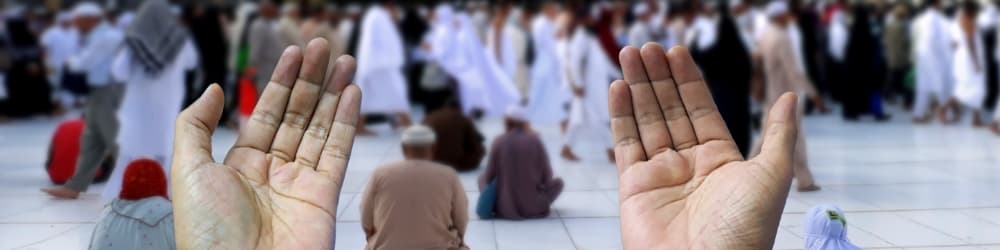
Hajj & Umrah are forms of worship altogether linked to the remembrance of Allah through each pilgrimage, which includes distinct prayers, dhikr, and supplications. In addition, dua while on pilgrimage is highly encouraged as Hajj & Umrah contain many times when dua are accepted.
When making dua at Hajj & Umrah, it is better to focus on sincerity rather than trying to memorize lengthy Arabic prayers. Islam permits Muslims to ask Allah in another language, although the authentic duas given by the Prophet Muhammad should be preferred.
Dua Before Leaving Home for Hajj or Umrah
Muslims should recite the travel dua before embarking on their journey. This supplication is a sunnah that requests help from Allah for safety and ease in their travels.
Arabic: “Subhanalladhi sakhkhara lana haza wa ma kunna lahu muqrinin. Wa inna ila rabbina lamunqalibun”)
Translation: “Glory be to Allah, Who has made this (travel) with ease for us, otherwise we would not have been able to make it (travel) ourselves. We will certainly return to Lord.”
Moreover, pilgrims are encouraged to pray that their journey will be safe, that their good deeds will be accepted and that they will receive forgiveness from Allah for their sins.
Talbiyah: The Most Important Hajj and Umrah Recitation
The Talbiyah is among the most sacred and powerful of all words spoken by those who make pilgrimage to Mecca (the Hajj). The Talbiyah is first recited upon entering the State of Ihram.
Talbiyah:
Labbayk Allahumma labbayk, Labbayka la sharika laka labbayk, Innal hamda wan ni'mata laka wal mulk, La sharika lak.
Meaning:
Here I am O Allah, Here I am, Here I am, you have no partner, Here I am! Surely, all praise, all blessings and all sovereignty belong to you (Allah) and you have no partner.
The Talbiyah is beautiful and clearly expresses total submission to Allah. As such, the Talbiyah is a phrase recited continuously by pilgrims until reaching Makkah.
Dua Upon Entering Masjid al-Haram
Entering Masjid Al-Haram for a Muslim is filled with emotions, so when you enter you should say:
“Allahumma iftah li abwaba rahmatik.”
Meaning: "O Allah, open for me the doors of Your mercy."
Many scholars say that upon seeing the Kaaba for the first time, you should make sincere duas; this is a very special time.
Best Duas During Tawaf
When you perform tawaf (circumambulation of the Kaaba), you go around seven times. Even though there isn’t a specific dua you should say for each round, you may engage in dhikhr (reciting Allah’s names), reciting from the Quran and making heartfelt supplications.
An example of a popular dua found in the Quran that is often recited in between the Yemeni Corner and the Black Stone is:
“Rabbana atina fid-dunya hasanah wa fil akhirati hasanah wa qina adhaban nar.”
Meaning: "O Lord, give us good in this world and good in the Hereafter and protect us from the punishment of the Fire."
This dua is powerful as it gathers both worldly blessings and eternal success together; many pilgrims repeat it throughout tawaf.
Duas During Sa’i Between Safa and Marwah
As a part of their pilgrimage to Mecca for Hajj, participants walk between the hills of Safa and Marwah to honor the act of searching for water by Hajar, mother of Ismail. As they walk, they would often say:
“Inna as-Safa wal-Marwata min sha’a’irillah.”
While completing this part of the pilgrimage, many pilgrims would offer personal dua requesting help from Allah.
Powerful Dua on the Day of Arafah
The Day of Arafah holds great religious significance within the Hajj pilgrimage. On this day, hundreds of thousands of pilgrims gather at Mt. Arafah (the place where Muhammad gave his last sermon) to pray for forgiveness and repentance.
On this day, the following dua is frequently used by pilgrims:
“La ilaha illallahu wahdahu la sharika lah, lahul mulku wa lahul hamdu wa huwa ala kulli shay’in qadir.”
This dua translates to:
“There is only one god; Allah with no partners. He owns everything in this universe, and He deserves all of the praise; he is able to do all things.”
In addition to the dua mentioned above, the pilgrims should also ask Allah for forgiveness, guidance, health, halal رزق, and Jannah. Prayers made on the Day of Arafah are accepted, and it is a day of great mercy from Allah.
Dua After Completing Hajj or Umrah
Pilgrims after completing their Hajj or Umrah should continue to make dua (supplications) and express thanks to Allah. As part of their gratitude, pilgrims often recite this dua: "Allahumma taqabbal minni." which is translated to mean as follows: "O Allah, accept this from me."
Also, believers should ask for Allah’s blessing of continuing worship once they return to their homes. The intention behind performing Hajj or Umrah correctly should lead to a complete transformation in a person's spiritual and moral characteristics.
In Closing
The authentic dua (supplication) made during either pilgrimage, is one that is made with sure knowledge that it will strengthen the spiritual aspect of each individual performing talaab (pilgrimage). Every single dua offers the opportunity for the believer to be drawn closer in their taqwa (God-Consciousness) to Allah. Thus, every pilgrim should have pre-prepared a list of duas to recite during their pilgrimage to Makkah or Madinah.
Most importantly, the intention must be pure rather than making perfectly pronounced dua. Allah knows every single language and understands every heartfelt supplication made. Whether you are making tawaf, performing Sa’ i, or supplicating while standing at Arafah, the dua made with a sincere heart, will change a believer’s life forever!
Muslims who learn the authentic duas will elevate their Hajj and Umrah experience to one of greater faith, peace, and connection to Allah.